AVKASA
A property search that thinks like the buyer, not like the CRM.
A real estate website connected to Tokko Broker, with property search, featured listings, and contact and valuation forms.
- Client
- AVKASA Inmobiliaria
- Year
- 2026
- My role
- UX/UI design and frontend development (end to end)
- Platform
- Website
- Disciplines
- UX/UI, Frontend
- Team
- Project management, social media and AVKASA’s sales team
- Duration
- 1 month
- Tools
- HTML · CSS · JavaScript · PHP · Tokko Broker · ChatGPT · Claude
In 30 seconds
Problem
The inventory lived in the Tokko Broker CRM and the site could not force it to be entered twice. Buyers and owners arrived with different intents and one single door.
Solution
A search that starts with Sale, Rent or Developments, connected live to Tokko, and intent-based forms that deliver every lead already tagged.
Impact
One single source of inventory, zero leads entered by hand and the API key kept out of the browser.

01 · The problem
Two audiences, one CRM, no double entry
AVKASA manages every property in Tokko Broker. A site with its own inventory would have forced the team to enter each house twice and, sooner or later, to show properties already sold. On top of that, two people with opposite goals land on the site: someone looking for a home and someone who wants to sell.
- How might we help a buyer reach the right properties without understanding how the CRM is organized?
- How might we give owners their own path to request a valuation?
02 · My role
From flow to code, and its limits
I designed the architecture, flows and interface, then built the frontend and the integration. Being on both sides let me decide what to design knowing exactly what the API allowed.
- Constraint: Tokko is the single source of truth for inventory.
- Constraint: the API key can never reach the browser.
- Constraint: every lead has to enter Tokko ready for follow-up.
03 · The insight
Operation first, everything else after
The CRM sorts properties as data: type, area, price, operation, all at the same level. People don’t search that way. They first decide whether they want to buy, rent or see a new development, and only then do area, price and rooms matter. That order became the backbone of the search.
04 · Decisions
Three ways to bring in the inventory
The most important decision was how to connect the site to Tokko, because everything else depended on it: how fresh the inventory is, how much control there is over the experience and how secure it is.
05 · The solution
A search with no dead ends
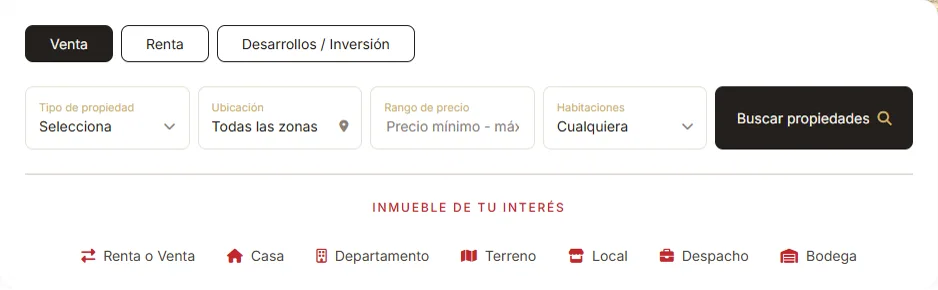
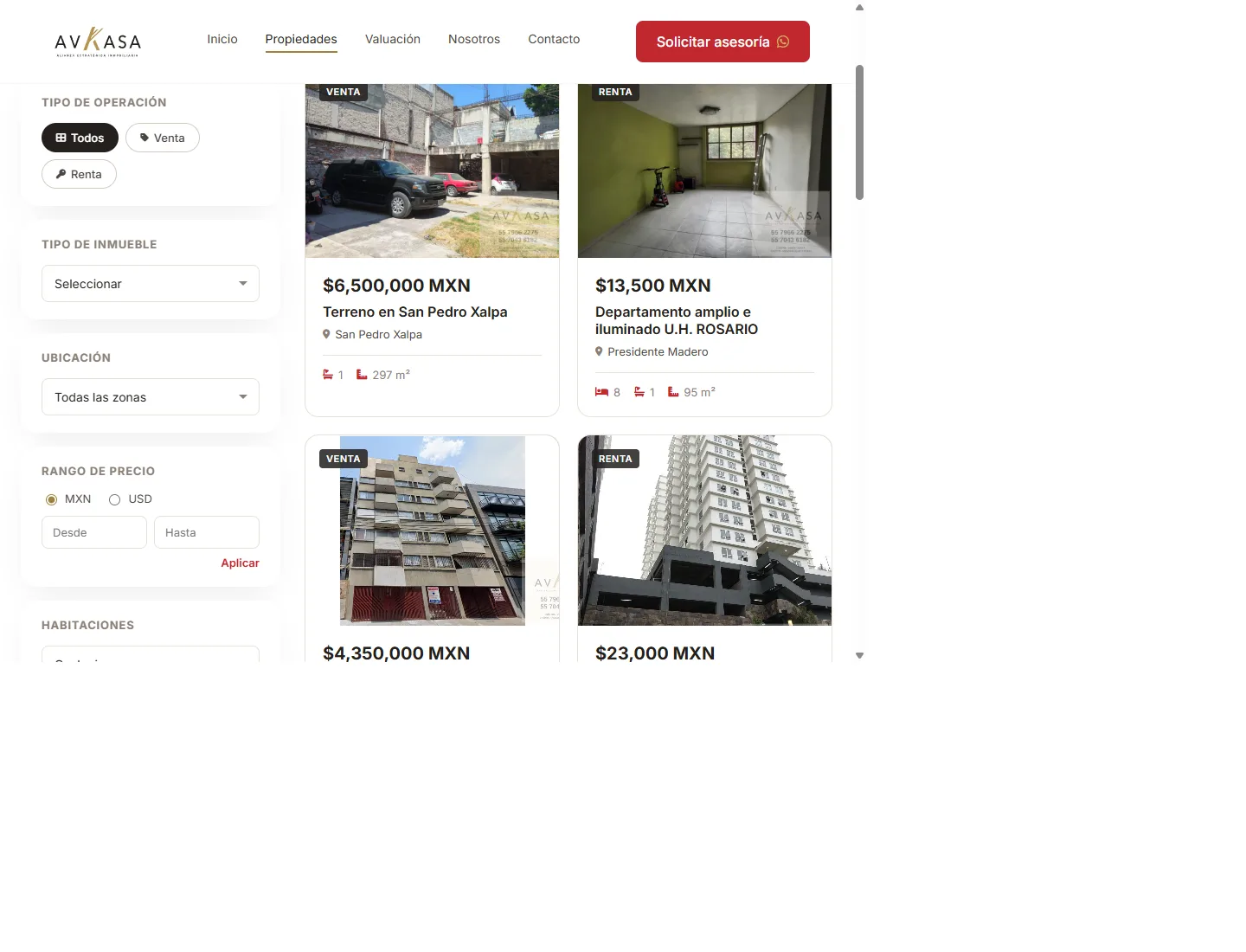
The flow starts with Sale, Rent or Developments, then narrows by type, area, price, currency and rooms. Areas come from Tokko, so the search never offers an area with no listings. Results add credit eligibility, sorting, counts and pagination, and the proxy translates each selection into an API query.
06 · The solution
One form per intent
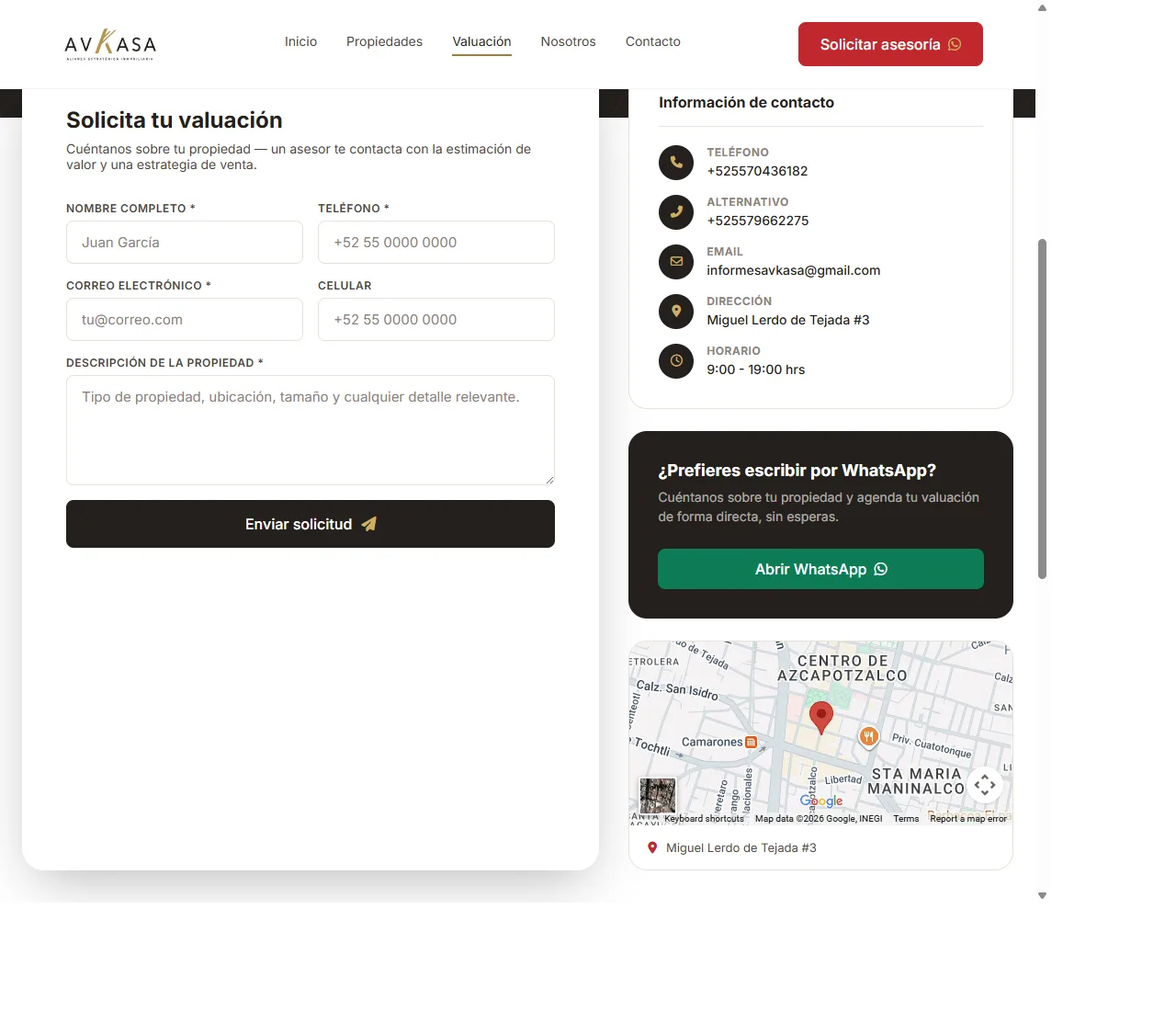
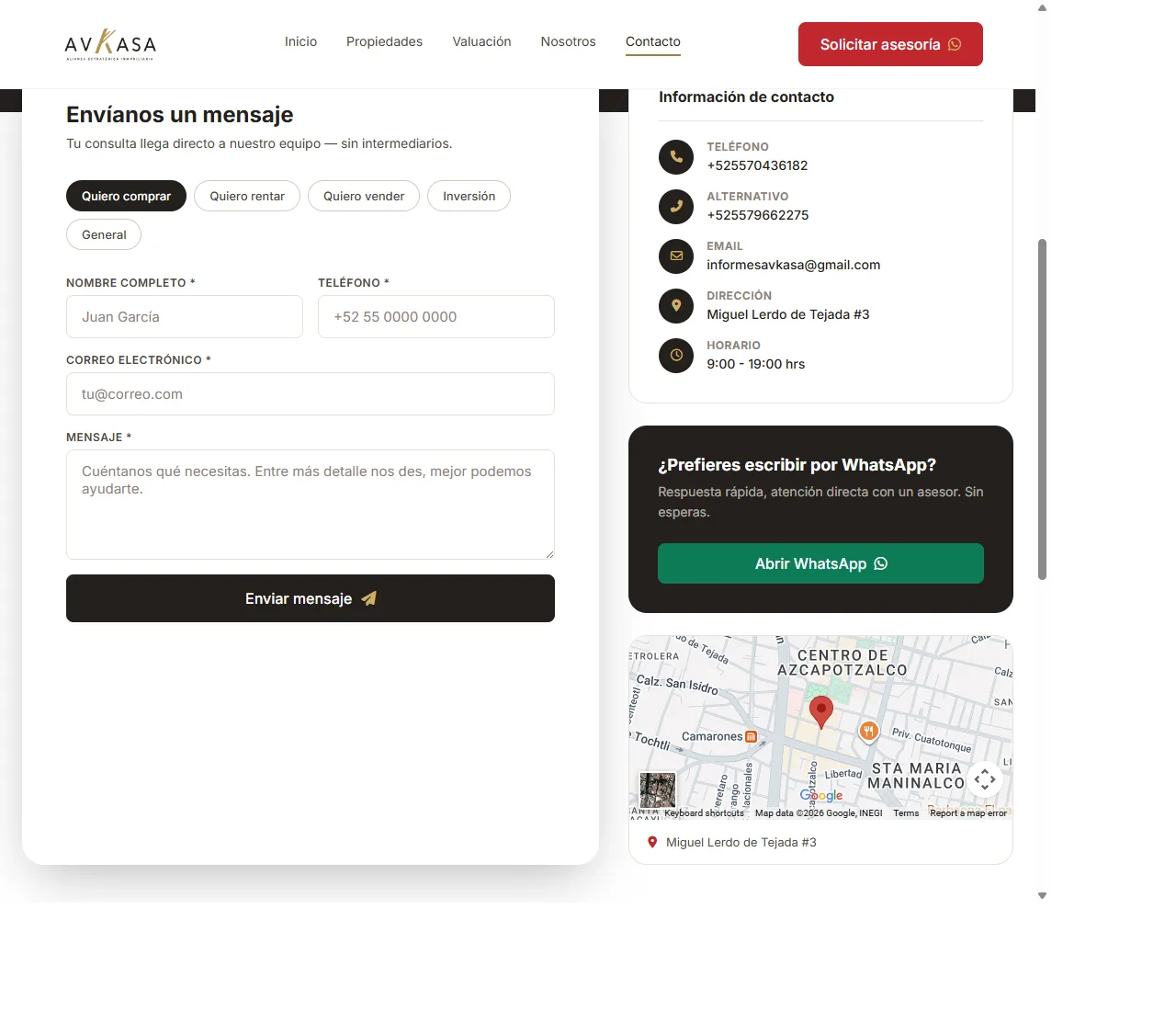
Owners describe their property and request a valuation; other visitors say whether they want to buy, rent, sell or invest. Both validate details and send the lead to Tokko with a subject and tags, so the advisor knows how to respond before opening it. WhatsApp and phone remain direct alternatives.
07 · The solution
Trust before the transaction
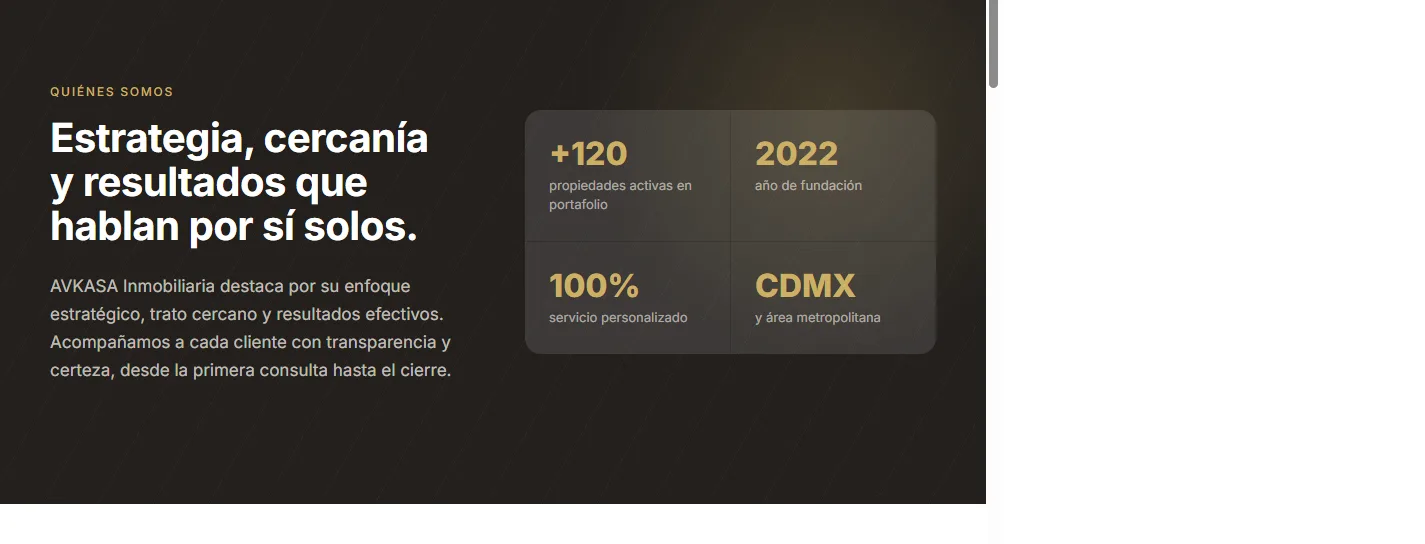
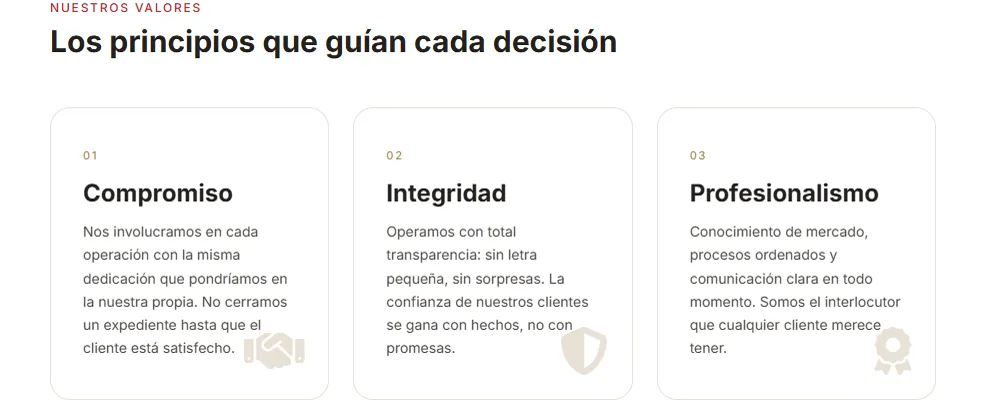
Nobody hands over their home or savings to a brand they don’t know. The Who we are page turns AVKASA’s mission, vision and values into concrete signals of trust before anyone fills in a form.
08 · Impact
What changed
The AVKASA team still works only in Tokko: what they publish there shows up on the site, and what comes in through the site shows up there.
- +30%
- more leads per month on average
- 1
- source of inventory, no double entry
- 0
- leads entered by hand
- 2
- intent-based paths
09 · Learnings
What I’d do differently
I would set up measurement from day one: events on the search and on every form to compare against the previous site. Without that baseline, impact gets described instead of measured. The natural next step is a property page with visit scheduling and alerts for saved searches.